
Modern Education Methods
Across the world, technology has opened new learning opportunities, offering flexibility for teachers and pupils, as well as 24-hour access to educational resources. Yet, as modernisation continues, some are left behind. This is the reality for villages high in the mountains above Cusco, where there is little to no internet access.
Since 2021, the Mobile Library has been visiting these communities every Saturday. The programme was born out of the education crisis caused by the COVID-19 pandemic, with the goal of bringing learning opportunities directly to children. Now, a few years on, we are facing new and evolving challenges.
Remote Learning: Not as We Know It
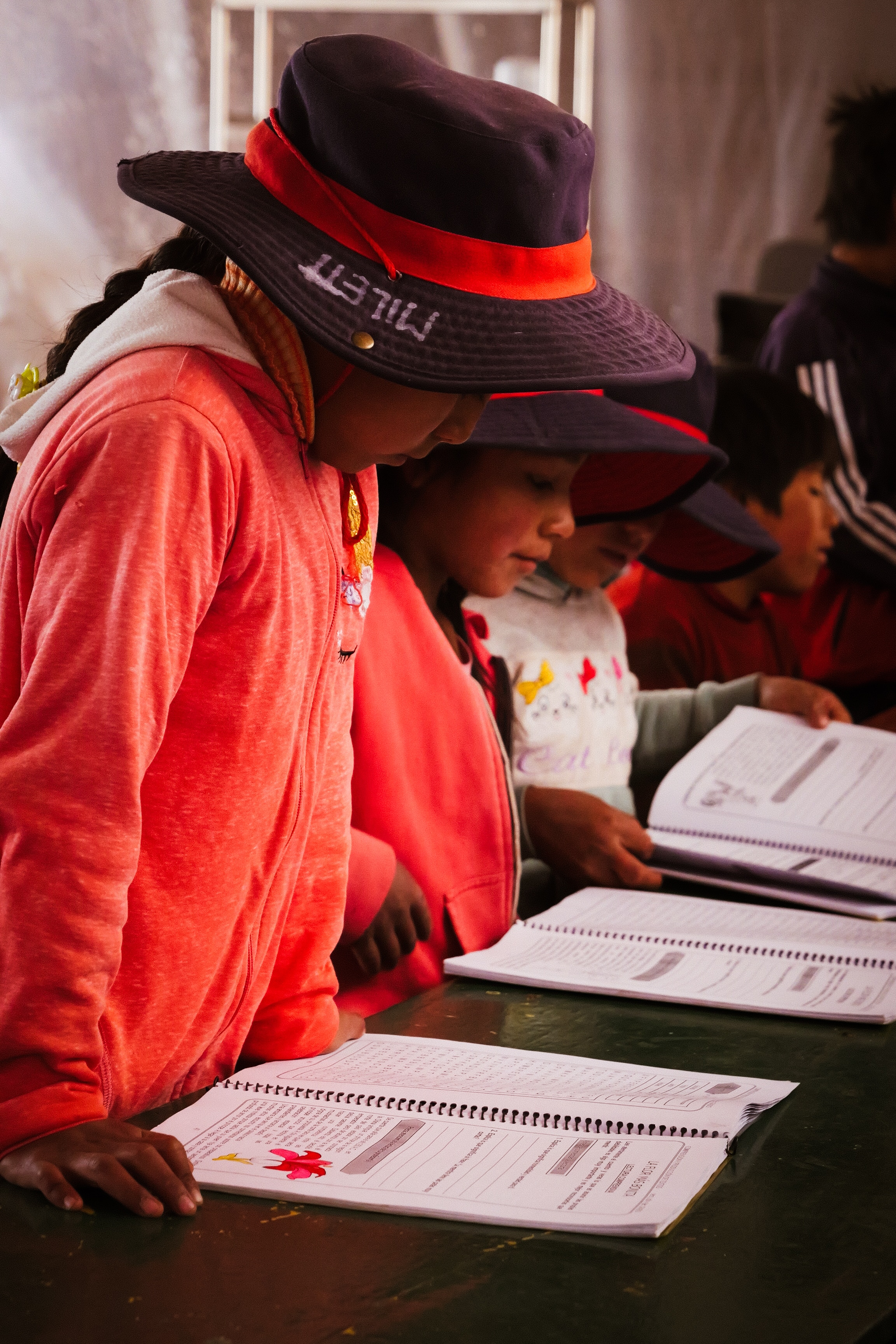
Whilst a lack of technology remains an obstacle, declining engagement and commitment in primary education have become even more pressing. Underfunded schools struggle to provide adequate resources and to maintain regular attendance. After school, homework is rarely completed. In many of these communities, economic and religious activities traditionally take priority over education. As a result, literacy rates in rural areas remain low.
With the Mobile Library, this is the gap we’re working to bridge. Our focus is to support children who are struggling in school - offering them not just books, but the encouragement, time, and the space they need to learn.
Teaching Literacy: Our Approach
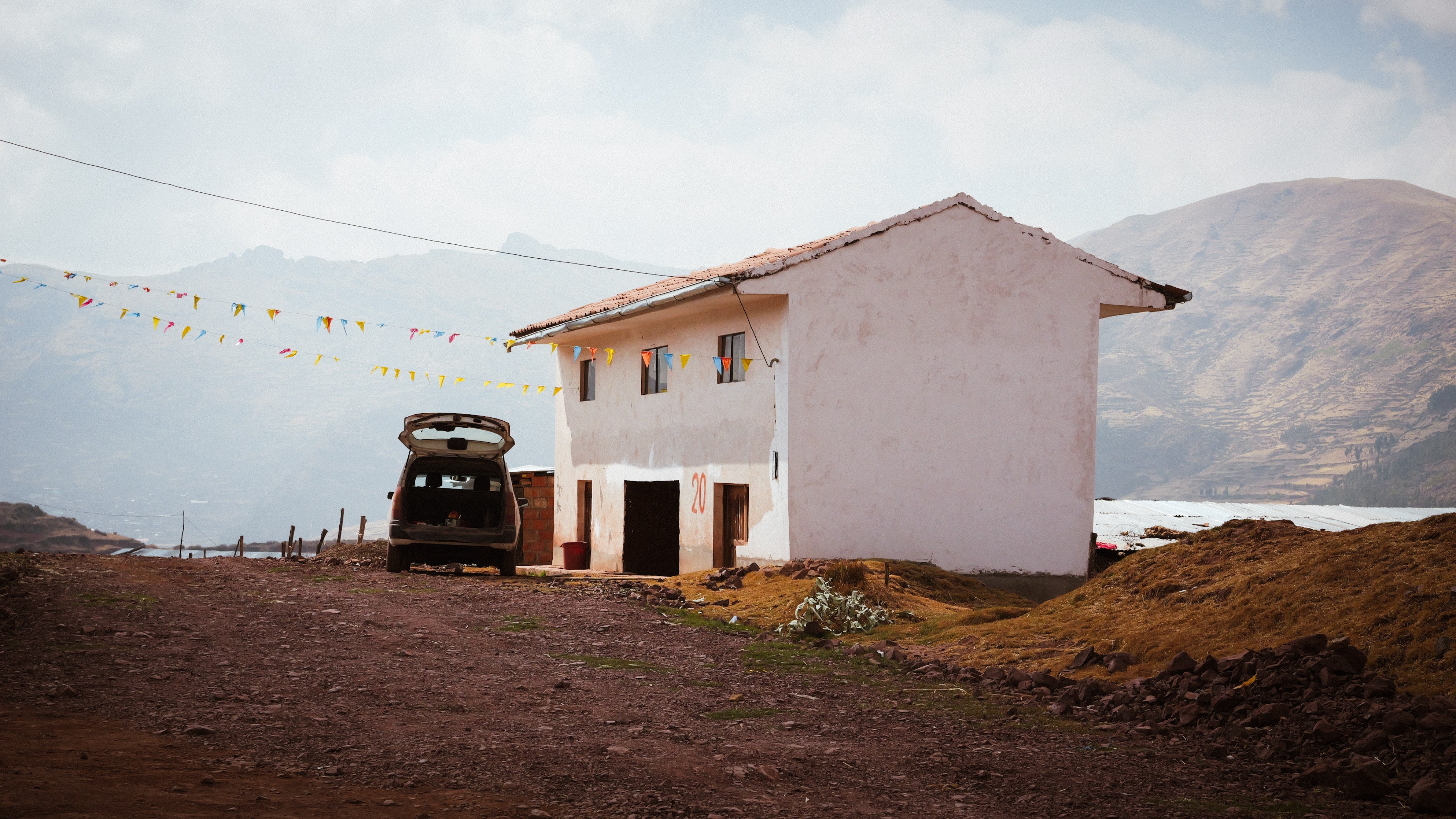
In 2025, we are placing a special focus on boosting literacy levels. This goes beyond simply reading, it includes problem-solving, text comprehension, pronunciation, and critical thinking. Just as importantly, the sessions are about having fun, so our talented teachers target each skill through a variety of games. With a vintage minivan and a supply of over 700 books from Picaflor House, Mara and Davide have everything they need to deliver engaging and exciting lessons every Saturday.
After hopping into the van last Saturday morning, I witnessed the unwavering enthusiasm they bring to each village and the admiration they receive from the students. Mara began the class with an interactive story told through a mini theatre performance. It was a classic tale of animals working together to reach the moon, and the children helped her complete the story. At the end, we all debated what the moon might taste like. Suggestions ranged from mango and passionfruit to pollo a la brasa, a traditional Peruvian chicken dish... I wouldn’t mind finding that on the moon!
Once everyone was warmed up, various group activities followed from pronunciation exercises with the older children to a lively game of hot potato with the younger ones. The teachers are able to tailor each class to the specific needs of their students.
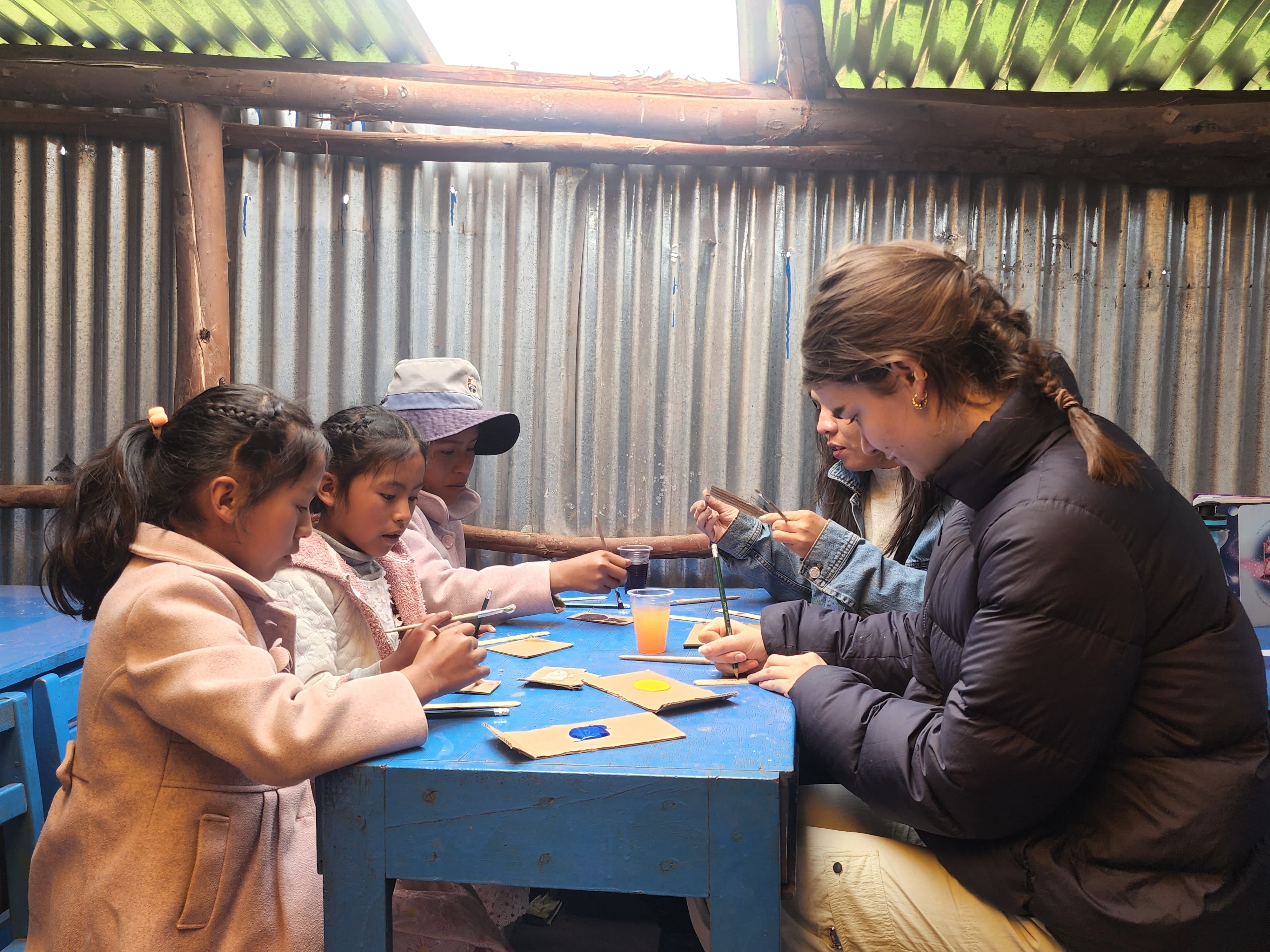
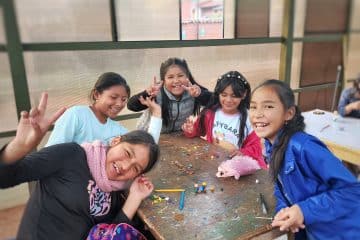
There’s also time to be creative. During this session, the children took part in a bookmark designing workshop. The younger ones learned how to mix primary colours to create the perfect shades for their designs. We also encouraged them to take inspiration from their surroundings. The results were brilliant: green landscapes with birds and a range of flowers from the potato plant.
The Literacy Crisis
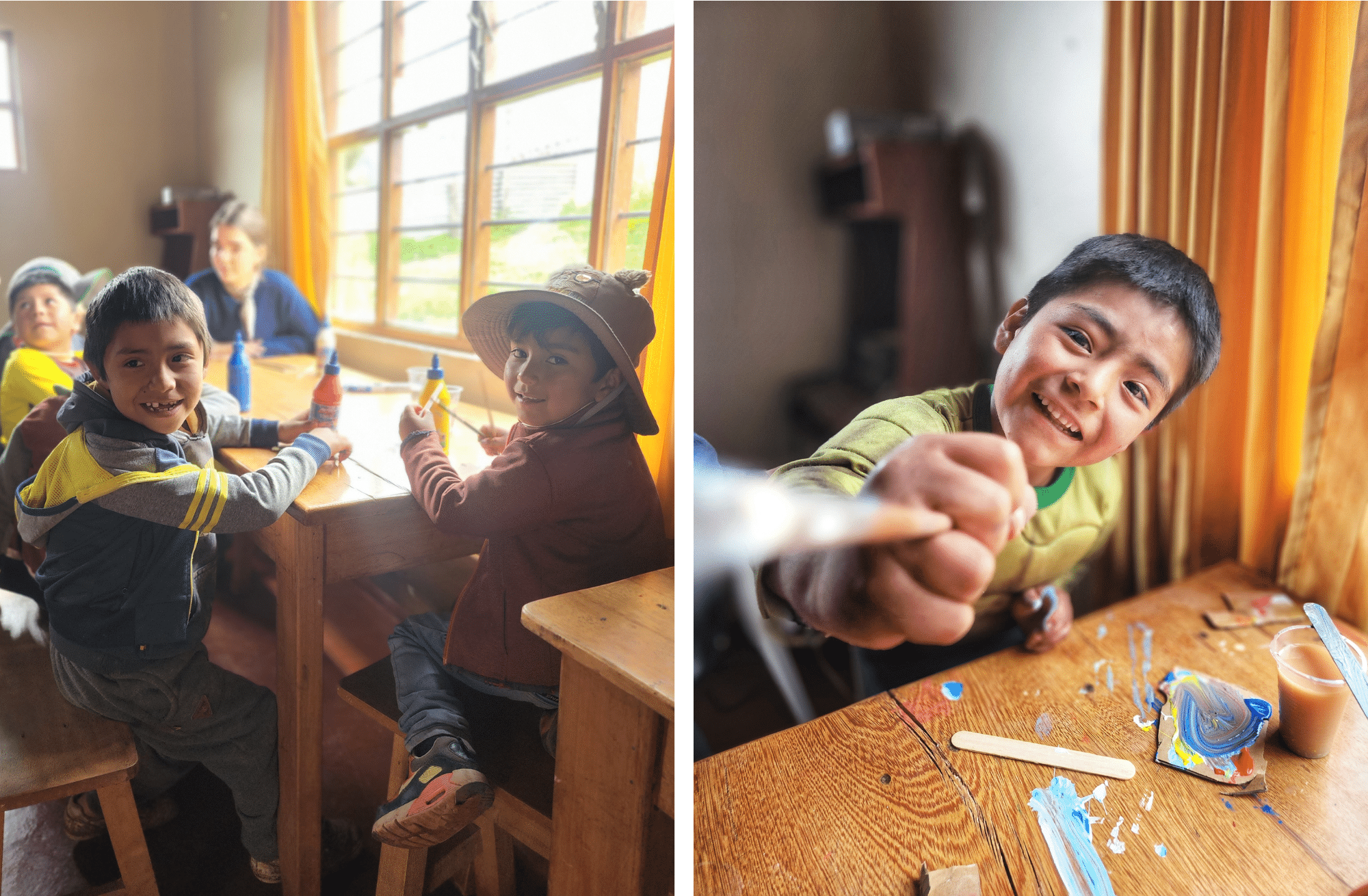
Now more than ever, we aim to help children stay in school and, importantly, continue on to secondary education. In 2023, only 41% of individuals aged 15 and older had attained secondary education, while 21.7% had reached only the primary level. These are the facts we are striving to change, one small step at a time, through the Mobile Library.
There are many factors that limit children's access to secondary education: poverty, early employment, and lack of access. However, illiteracy remains a key barrier. In Cusco, the illiteracy rate for those aged over 15 was 8.8% in 2023. Although this figure has been steadily improving, clear signs of slow progress remain. Walk through the city and you’ll see young children working—selling street food or toys. Many of these children come from rural villages to earn money, pulling them out of school for the day. It’s not the fault of the parents, but a reflection of their reality; in many communities, work is encouraged over education. Through our sessions, we hope to offer these children something different: a quiet moment, a chance to read.
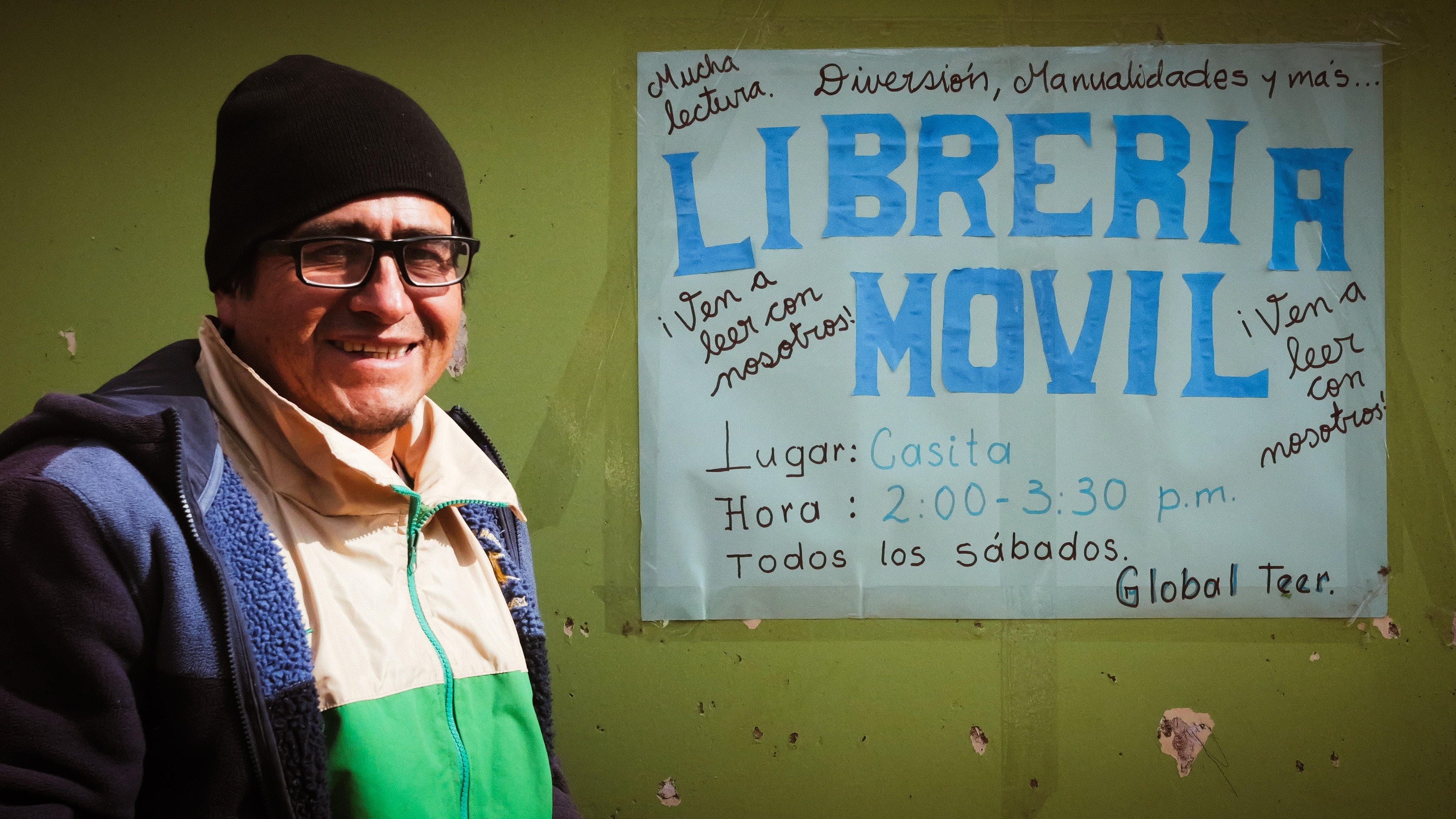
Expanding the journey of the Mobile Library
After nearly four years, we’ve built strong relationships with villages across rural Cusco and are thrilled to be forming new ones. Engaging with the community is vital so that more parents send their children to our sessions. Each year every child grows in confidence with reading and expressing themselves. We’re excited to welcome new students as we continue.
This year, we hope to expand the route of the Mobile Library to reach more villages across the region. With the help of generous donations, our aim is to hire additional teachers and purchase a new van, enabling us to run a dual programme every Saturday. There are still many children and primary schools in and around Cusco that need our support. We would be delighted to grow the project and reach even more communities.

0 Comments